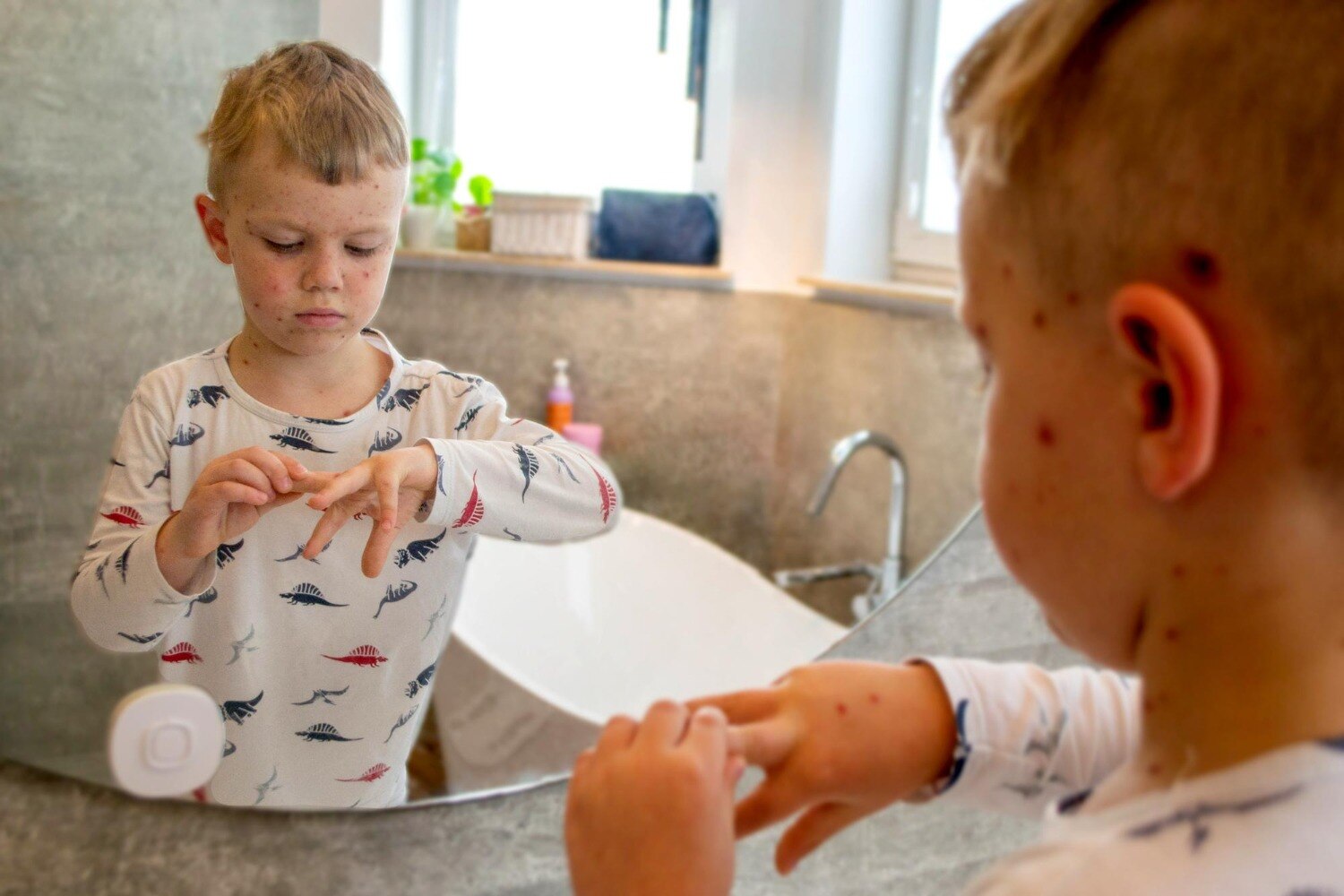
A red or crusted patch is not automatically a bacterial infection: eczema, fungal disease, insect bites, heat rash and viral illnesses can look similar. By the end, you will know which signs need same-day care, what to do before an appointment, and how clinicians choose between wound care, topical treatment, oral antibiotics and drainage.
Key takeaways
- Pain, warmth, pus, crusting, or rapid spread point to possible bacterial infection.
- Seek same-day assessment for fever, spreading redness, severe pain, or infection near the eye.
- Keep the area clean and covered; do not squeeze sores or share towels.
- A clinician may use examination, swabs, and medical history to select treatment.
How can you tell a bacterial skin infection from a rash or bite?
A bacterial infection becomes more likely when a rash develops pain, warmth, discharge, crusting or rapid spread, but appearance alone cannot confirm the cause. Impetigo often produces oozing sores with honey-coloured crusts. Eczema deserves review when new pus appears or tenderness worsens quickly.
Folliculitis forms spots centred on hair follicles, while deeper bacterial infection becomes increasingly painful, warm and swollen.
| Clue | More consistent with | What to notice |
|---|---|---|
| Bacterial infection | Impetigo, infected eczema, cellulitis or a boil | Pus, oozing, yellow-brown crusts, warmth, pain, tenderness or redness spreading over hours to days |
| Eczema | Dry, itchy, recurrent patches | Scaling and cracking without new pus; familiar sites may flare repeatedly |
| Allergy | Hives | Raised itchy welts that appear in one place and fade within hours, then recur elsewhere |
| Fungal infection | Ringworm | Ring-shaped scaling with a clearer centre and a slowly enlarging edge |
| Insect bite | A bite reaction | Several itchy bumps grouped on exposed skin, often with a central punctum |
| Heat rash | Sweat-related irritation | Tiny itchy or prickly spots in sweaty folds, the neck or covered areas |
| Viral rash | Hand-foot-and-mouth disease and other viral eruptions | Fever, mouth sores, blisters, or lesions on the hands and feet |
Distribution and speed matter: scattered itch after outdoor exposure suggests a different cause from one hot, tender area expanding rapidly. If you are searching for treatment for bacterial skin infections in children in Pune, have a clinician examine the child; bacterial, viral, fungal and inflammatory rashes can overlap.
Which bacterial skin infections need same-day medical assessment?
A small, localized sore can usually receive prompt outpatient review rather than emergency care. This includes limited impetigo, infected eczema, folliculitis, a minor boil, or an infected wound when the child is otherwise well. Cellulitis and erysipelas need same-day assessment because infection can spread through deeper skin and tissues.
| Condition | Usual concern | Assessment |
|---|---|---|
| Impetigo or infected eczema | Localized crusting, oozing, pus, or worsening tenderness | Prompt outpatient review; same day if spreading or the child is unwell |
| Folliculitis | Small pus-filled spots around hair follicles | Prompt review if numerous, painful, or spreading |
| Boil or abscess | A tender lump containing a collection of pus | Same-day review if large, worsening, recurrent, or surrounded by cellulitis |
| Infected wound | Increasing redness, warmth, pain, discharge, or swelling | Same day if worsening or accompanied by fever |
| Cellulitis or erysipelas | Expanding, hot, painful redness; erysipelas often has a sharply defined raised edge | Same-day medical assessment |
Seek urgent care for rapidly spreading redness, severe or disproportionate pain, fever, red streaks, worsening pus, swelling near the eye, facial swelling, blisters with illness, purple or black skin, breathing or swallowing difficulty, dehydration, unusual drowsiness, or a weakened immune system. Eye and facial involvement has a lower threshold for assessment.
A boil or abscess may need drainage; antibiotics alone may not empty trapped pus. If you are searching for a child skin infection doctor in Pune, choose a clinician who assesses children and can arrange urgent escalation when these warning signs appear.
What should you do before your child is examined?
Before the examination, clean the lesion gently with soap and water, then pat it dry. Do not scrub, because friction can break the skin and spread drainage.
- Cover draining skin with clean gauze. Change it when wet or dirty, and place used dressings in a closed bin.
- Wash your hands before and after touching the lesion, dressing it, or applying anything nearby. Keep your child’s fingernails short to reduce scratching and transfer of bacteria.
- Do not squeeze or puncture a boil. Pressing can push infection deeper or spread it into nearby tissue; an abscess may need safe drainage by a clinician.
- Do not put leftover antibiotics, another person’s prescription, steroid-antibiotic combination creams, toothpaste, turmeric paste, or strong antiseptics inside an open wound unless a clinician specifically advises it. The wrong product can irritate tissue, mask the infection, or delay the correct treatment.
- Keep towels, clothing, razors and bedding separate until you receive advice. Drainage and skin flakes can carry bacteria to another person or return to your child’s skin through shared fabric.
- Ask the treating clinician when your child may return to school or resume close-contact activities. Keep the child away from those activities when lesions cannot be covered or treatment has not started, following local school-health rules.
How does a clinician confirm the diagnosis and choose treatment?
The clinician first examines the lesion and its edge: redness, warmth, tenderness, swelling, crust, blisters, pus, tissue damage and how quickly it is spreading. They check the surrounding skin, nearby lymph nodes, temperature and the child’s general condition, including alertness, hydration and breathing.
A swab or bacterial culture of pus or drainage helps when an abscess keeps returning, the infection is severe, treatment has failed, or resistant organisms are suspected. Blood tests or imaging enter the assessment when the child has fever, deep infection, extensive cellulitis or concern about an abscess beneath the skin.
| Option | What it means | When it applies |
|---|---|---|
| Topical treatment or antiseptic care | Treats bacteria at the skin surface | Selected, localized non-bullous impetigo |
| Oral antibiotics | Treats infection beyond a small surface area | Extensive or bullous impetigo, or systemic illness |
| Incision and drainage | Opens and empties a pus collection | A suitable boil or abscess; antibiotics alone may not clear it |
| Wound care | Cleans, protects and monitors damaged skin | An infected cut, scrape, bite or other injury |
Treatment also addresses the trigger, such as uncontrolled eczema or an infected insect bite. Antibiotic choice, dose and duration depend on age, weight, allergy history, kidney function, previous treatment and local resistance patterns.
Do not use leftover or shared antibiotics, stop early without medical advice, or treat every rash indiscriminately: these actions cause side effects, sensitization and antimicrobial resistance.
When should you seek a pediatric skin specialist in Pune?
Antibiotics are not the answer to every rash because they treat bacteria, not viruses, fungi or eczema. Hand-foot-and-mouth disease usually needs fluids, age-appropriate fever or pain relief and monitoring. Molluscum contagiosum often clears without treatment; scratching or picking it can cause a secondary bacterial infection and scarring.
| Condition | What treatment usually targets | Why diagnosis matters |
|---|---|---|
| Bacterial infection | Antibiotic treatment, drainage or wound care | Pus, spreading warmth or tenderness needs assessment |
| Viral infection | Fluids, comfort care and monitoring | Antibiotics do not treat the virus |
| Fungal infection | An antifungal selected for the body site | Steroids or antibiotics alone can worsen the problem |
| Inflammatory disease | Control of inflammation and the underlying trigger | Chronic eczema can resemble infection |
A pediatrician may manage an uncomplicated infection. Choose a pediatric dermatologist for diagnostic uncertainty, recurrent infections, unusual rashes, scarring, treatment failure or suspected chronic eczema.
If you search for a child skin infection doctor in Pune, “viral skin infection treatment Pimpri Chinchwad” or “pediatric dermatologist Pimple Saudagar,” check that the clinician evaluates children and distinguishes bacterial, viral, fungal and inflammatory disease.
Nestcare Mother and Child Care Clinic is a local option for coordinated pediatric and dermatology assessment in the Pimpri Chinchwad and Pimple Saudagar area.
Seek immediate medical care, not a routine appointment, for rapidly spreading redness, severe pain, fever, facial or eye swelling, red streaks, worsening illness with pus, purple or black skin, breathing or swallowing difficulty, dehydration or unusual drowsiness.
Related service
Pediatric Dermatologist Bacterial & Viral Skin Infection Treatment Pediatric Bacterial & Viral Skin Infection Treatment – Gentle Care for Healthy Childhood Skin Children are more prone to bacterial and viral skin... View service → |
Frequently asked questions
How can you tell a bacterial skin infection from a rash or bite?
Bacterial infection becomes more likely when the area is painful, warm, draining, crusted, or spreading quickly. Impetigo often causes oozing sores with honey-coloured crusts, but examination is needed because rashes and bites can look similar.
Which bacterial skin infections need same-day medical assessment?
Arrange same-day assessment for rapidly spreading redness, increasing warmth or swelling, severe pain, pus, fever, red streaks, facial swelling, or infection near the eye. Infants and children with weakened immunity also need prompt medical advice.
What should you do before your child is examined?
Wash your hands, gently clean the area with clean water, cover draining sores with a fresh dressing, and avoid squeezing or scratching. Do not share towels, clothing, bedding, or prescribed medicines.
How does a clinician confirm the diagnosis and choose treatment?
The clinician examines the skin, asks when it began and how it changed, and checks for fever or deeper infection. A swab may be sent for testing when the diagnosis is uncertain, the infection is severe, or treatment has not worked.
When should you seek a pediatric skin specialist in Pune?
Ask for a pediatric dermatologist when infections recur, fail to improve, leave persistent inflammation, involve eczema, affect the scalp or nails, or have an unclear diagnosis. A specialist can also review suspected viral or fungal infections.
Keywords